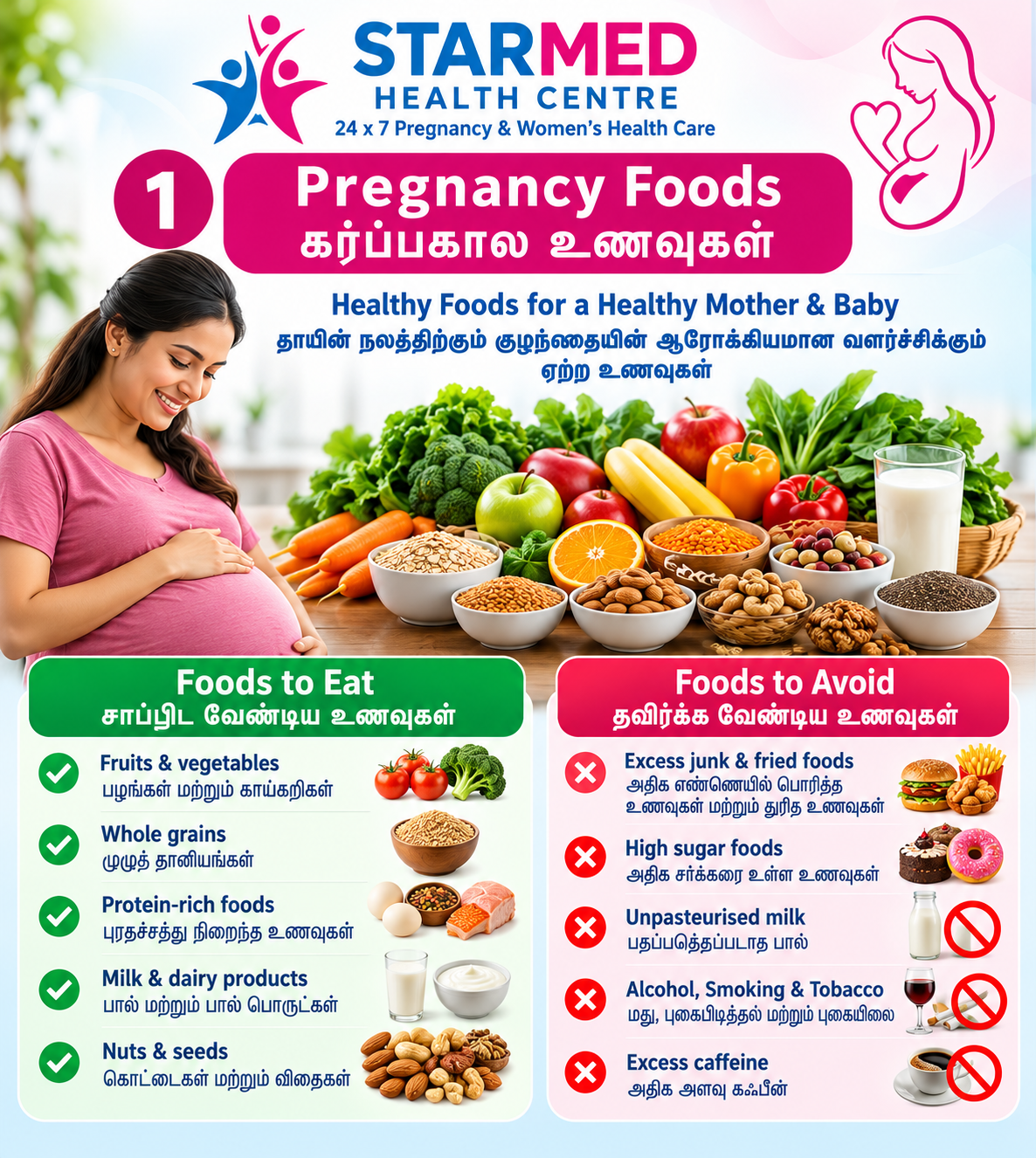
Pregnancy Foods | கர்ப்பகால உணவுகள்
Healthy foods to eat and foods to avoid during pregnancy.
Pregnancy tips, healthy foods, scan guidance and health awareness in English and Tamil.
கர்ப்பகால குறிப்புகள், ஆரோக்கிய உணவுகள், ஸ்கேன் வழிகாட்டுதல் மற்றும் உடல்நல விழிப்புணர்வு — ஆங்கிலம் மற்றும் தமிழில்.
Pregnancy guidance and women's health information in English and Tamil.
கர்ப்பகால வழிகாட்டுதல் மற்றும் பெண்கள் நலத் தகவல்கள் — ஆங்கிலம் மற்றும் தமிழில்.
Healthy foods to eat and foods to avoid during pregnancy.
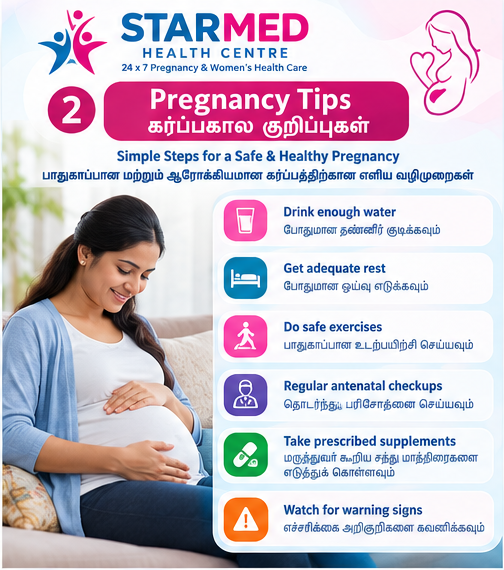
Everyday care, hydration, rest and antenatal checkups.
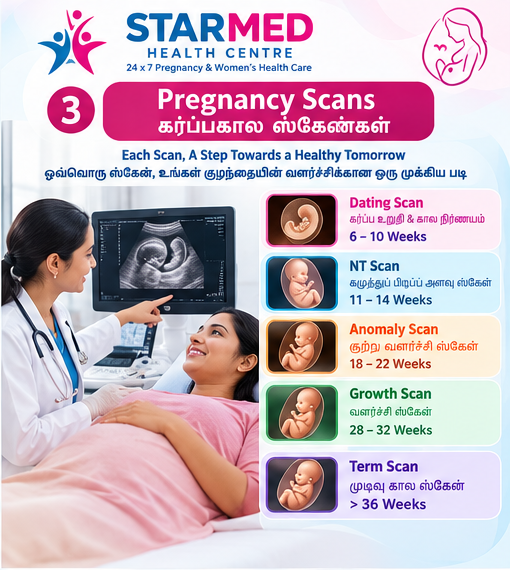
Common pregnancy scan stages and their timing.
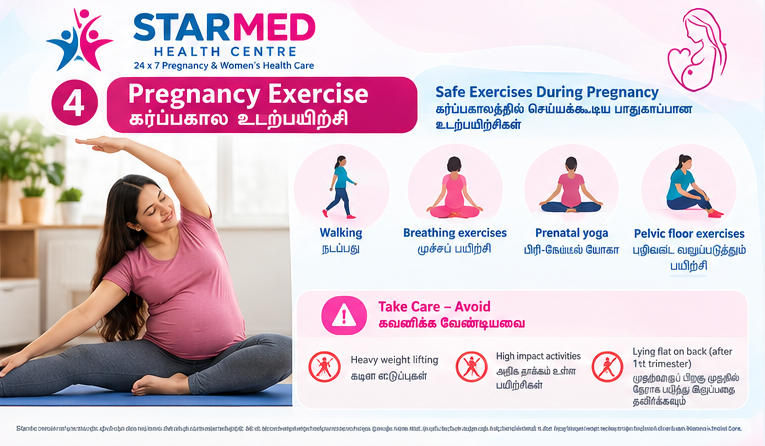
General guidance about safe activity during pregnancy.
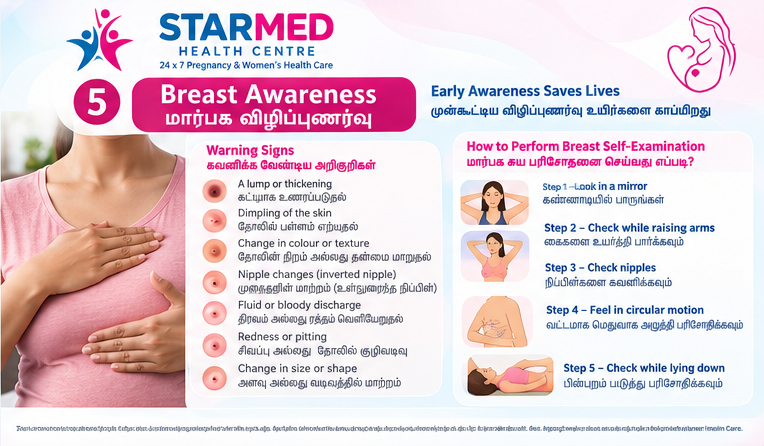
Changes to look out for and breast self-awareness.

Additional pregnancy nutrition education in English and Tamil.
Aim for a varied, balanced diet. Include whole grains and cereals; pulses, beans and other protein-rich foods; thoroughly washed fruits and vegetables; leafy greens; nuts and seeds; and pasteurised milk or suitable dairy foods. Choose well-cooked eggs, meat and fish. Your maternity-care professional may recommend folic acid, iron, calcium or other supplements based on your needs.
Avoid alcohol completely. Avoid raw or undercooked meat, eggs and seafood, unpasteurised milk products, and fish known to contain high levels of mercury. Wash produce well and handle food safely. Limit caffeine according to your clinician's advice, and keep foods high in salt, added sugar or unhealthy fats occasional. Ask your maternity-care team for advice suited to your health and diet.
Attend antenatal appointments and recommended scans, drink enough water, eat regular balanced meals, rest well and stay physically active only as advised for your pregnancy. Avoid smoking, alcohol and unapproved medicines or supplements. Discuss any medicine with your clinician before taking it.
The patient-education leaflet lists approximate windows: confirmation and dating scan at 6–10 weeks; NT scan at 11–14 weeks; anomaly/target scan at 18–22 weeks; growth scan at 28–32 weeks; and a term scan after 36 weeks when advised. Your obstetrician may change the schedule based on your pregnancy and medical history. Follow your own clinician's plan.
Many people with an uncomplicated pregnancy can continue suitable physical activity, but the right activity and intensity vary. Ask your obstetrician before starting a new routine. Avoid activities with a high risk of falling or abdominal impact, stay hydrated, and stop if you feel unwell. Follow individual advice if you have pregnancy complications.
Seek urgent medical advice for heavy vaginal bleeding, severe abdominal pain, fluid leaking from the vagina, severe headache with vision changes, fainting, chest pain or other urgent symptoms identified by your maternity team. Contact your healthcare professional if you are worried about any new symptom.
Look for a new lump or thickening, skin dimpling, a change in breast skin colour or texture, a new nipple change, clear or bloody nipple discharge, redness, or a change in breast size or shape. Many changes are not cancer, but a new or persistent change should be checked by a healthcare professional.
Become familiar with the usual look and feel of your breasts. Look in a mirror with your arms relaxed and then raised, and notice changes in shape, skin or nipples. Gently feel the breast and underarm area using your finger pads. A self-check does not replace recommended screening or a clinical examination. Contact a clinician if you notice a change.
Premature ejaculation occurs when ejaculation happens sooner than desired during sexual activity and causes distress or difficulty for one or both partners. Occasional early ejaculation is common and does not necessarily indicate a medical problem.
Possible contributing factors include anxiety, stress, relationship difficulties, sensitivity, and certain medical or psychological conditions. The cause can vary from person to person, so an individual assessment may be helpful.
Yes. Depending on the cause, management may include counselling, behavioural techniques, treatment of underlying conditions, or clinician-recommended medication. Consult a qualified doctor before using medicines or topical products.
Seek medical advice if the problem is persistent, causes distress, begins suddenly, or occurs alongside pain, urinary symptoms, or other changes in sexual health.
No. Penis size alone does not determine sexual satisfaction, intimacy, or a person's ability to have a healthy relationship. Communication, comfort, consent, and overall sexual health are also important.
Yes. Size and appearance vary naturally between individuals. Temperature, stress, and arousal can also change the appearance of a flaccid penis.
There is no reliable evidence that commonly advertised pills, oils, or exercises permanently increase penis size. Some methods may cause injury. Avoid unverified products and consult a qualified healthcare professional about concerns.
If you have concerns about development, a noticeable change in size, pain, curvature, or sexual function, a urologist can assess your symptoms and explain appropriate options.
Possible causes include normal anatomical variations, irritation, inflammation, skin conditions, cysts, and infections, including sexually transmitted infections. Appearance alone cannot reliably establish the cause.
No. Some are harmless, while others need medical assessment. A clinician can examine the area and recommend tests when appropriate.
Arrange a medical examination for new, persistent, growing, painful, bleeding, ulcerated, or unexplained lesions. Seek prompt care for severe pain, fever, rapidly increasing swelling, or difficulty passing urine.
Avoid squeezing, cutting, or applying harsh chemicals or unprescribed creams. Keep the area gently clean and dry, and seek professional advice before treatment. If an STI is possible, avoid sexual contact until assessed.
Erectile dysfunction (ED) means repeatedly having difficulty getting or maintaining an erection sufficient for desired sexual activity. An occasional difficulty can occur and does not automatically mean you have ED.
Possible causes include diabetes, high blood pressure, cardiovascular disease, medication effects, hormonal conditions, stress, anxiety, and lifestyle factors. Sometimes more than one factor is involved.
Many cases can be managed. Treatment depends on the cause and may include lifestyle changes, addressing underlying conditions, counselling, or prescription medication. A doctor should review your medical history and other medicines before treatment.
Yes, particularly when the problem persists or develops suddenly. ED can sometimes be associated with diabetes or cardiovascular conditions, so a health assessment is worthwhile.
No. These medicines may interact dangerously with nitrate medicines and may be unsuitable for some heart conditions. Avoid unverified online products and consult a qualified doctor.
Try different keywords or browse the topics above.
This page provides general educational information in English and Tamil. It is not a substitute for medical examination, diagnosis or personalised treatment. Follow your obstetrician's advice for pregnancy care, food, supplements, scans and exercise.
இந்தப் பக்கம் ஆங்கிலம் மற்றும் தமிழில் பொதுவான கல்வித் தகவல்களை வழங்குகிறது. இது மருத்துவரின் பரிசோதனை அல்லது தனிப்பட்ட சிகிச்சை ஆலோசனைக்கு மாற்றாகாது. கர்ப்பகால உணவு, சத்து மாத்திரைகள், ஸ்கேன் மற்றும் உடற்பயிற்சிக்கு உங்கள் மகப்பேறு மருத்துவரின் ஆலோசனையைப் பின்பற்றுங்கள்.
Speak with a qualified healthcare professional to discuss your concerns and suitable next steps.
Contact Us